
California Rolls – American-Style Sushi Rolls
Making California Rolls at home is easy to do. I did a large amount of reading on how to make sushi rolls before attempting my first ones. Making California or Sushi does requires a small amount of initial practice. Do not be afraid to try!
You can use the techniques for making the California Rolls to make other variations with different fillings as sushi rolls are extremely versatile and you can make endless varieties. Think of a sushi roll as a sandwich and it is sure to get your imagination rolling as to what to fill it with. Be creative!
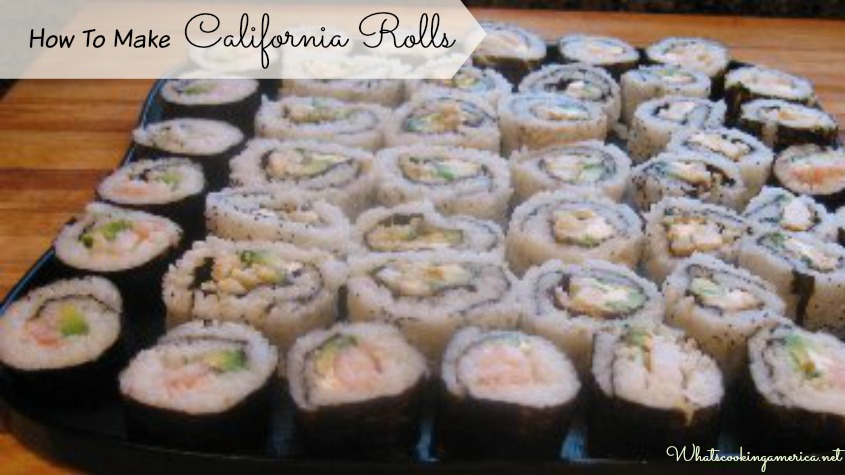
Food historians generally credit chef Manashita Ichiro and his assistant, Mashita Ichiro, of the Tokyo Kaikan restaurant in Los Angeles (located on the corner of 2nd and San Pedro) with “inventing” the California roll in the 1970s. The chef, realizing that many Americans did not like the though of eating raw fish, created the now famous California Rolls made with crab, avocado, and cucumbers.
Since then, American sushi chefs have created many variations with unique names such as Spider Roll, Philadelphia Roll, and Rainbow roll. Most people in Japan have never heard of the California Roll, though, and I would advise not trying to order one there.
Ingredients and equipment can be found at Japanese and Asian foods stores, at most large grocery stores, and online at What’s Cooking America’s Cooking Store (see green links on right and below).
- Bamboo sushi-roll mat
- Clean cutting board
- Sushi knife or very sharp knife
- Rice Cooker (optional)
- Wood spoon or plastic rice paddle for spreading rice
- Plastic wrap
- 5 sheets of sushi nori (seaweed in big squares)**
- 1 large cucumber
- 2 to 3 avocados
- Lemon juice, fresh-squeezed
- Crab meat, cooked or imitation crab sticks***
- Wasabi (Japanese horseradish)
- Soy sauce
- Pickled Ginger
-
In a small saucepan over medium heat, combine rice vinegar, sugar, and salt. Heat mixture just until the sugar dissolves (do not let it boil). Remove from heat and let cool until ready to use.
-
Start preparing the rice approximately 2 hours before you want to make the sushi rolls.
-
Wash rice, stirring with your hand, until water runs clear. Place rice in a saucepan with water; let soak 30 minutes.
-
Drain rice in colander and transfer to a heavy pot or Rice Cooker; add 4 cups water. NOTE: To improve the texture of the rice, after rinsing, let the rice drain 30 minutes in the refrigerator before cooking (put the strainer with the rice in a large bowl to catch the water).
-
If you do not have a rice cooker, place rice and water into a large heavy saucepan over medium-high heat; bring just to a boil, reduce heat to low and simmer, covered, for 15 minutes. Turn off heat and let rice rest, covered, for 15 additional minutes.
-
When rice is done cooking and resting, transfer to a large bowl; loosen rice grains gently with a rubber spatula or wooden spoon by cutting and folding (do not stir, as this will crush the rice) . NOTE: Either use the rice soon after preparing it, or cover it with a damp cloth to keep it moist. Do not refrigerate the cooked rice.
-
Sprinkle the cooled rice vinegar mixture over the rice, mixing together as you sprinkle (add enough dressing to coat the rice but not make it damp - you may not need to use all the vinegar dressing). Spread the hot rice on top of a large sheet of aluminum foil and let cool.
-
Wash, peel, and seed cucumber. Slice in half lengthwise, then cut into long, slender strips.
-
Cut the avocados in half lengthwise, then remove the pit; cut each section in half again (lengthwise), and carefully remove the peel. Cut the section in long slender strips. Sprinkle the sliced avocado with lemon juice to keep from discoloring.
-
If you are using snow, crab, remove the crab meat from the thicker portion of the legs and cut in half lengthwise. If you are using imitation crab sticks, remove the plastic wrapping and cut each in half lengthwise.
-
Place the cucumber slices, avocado slice, and crab slices on a plate; cover with plastic wrap and refrigerate until you are ready to use.
-
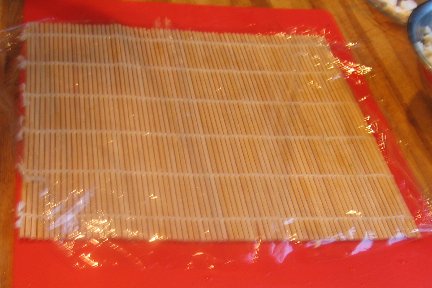
Lay the Bamboo sushi-roll mat on a cutting board with bamboo strips going horizontally from you.
-
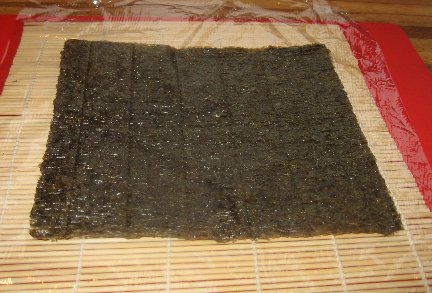
Place a sheet of plastic wrap on top of the bamboo mat (shiny side down). Place the Roasted-Seaweed (Nori) on top of the plastic wrap.
-
-
Spread a thin layer, 3/4 to 1 cup, of Japanese medium-grain sushi rice over 3/4 of the nori leaving approximately one inch of uncovered nori at each end. It helps to wet your fingers with cold water when you are patting the rice onto the nori.

-
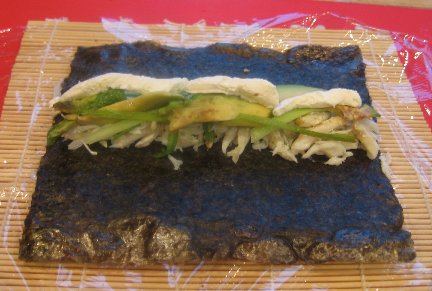
Arrange strips of avocado and cucumber along the center of the rice; top with crab meat.
-
Making Inside-Out Rolls - After spreading the rice on the nori, sprinkle with poppy or roasted sesame seeds. Cover with a sheet of plastic wrap on top. Lifting with the bottom plastic wrap, turn over the nori/rice sheet onto the bamboo rolling mat. Remove top plastic wrap and proceed as below.
-
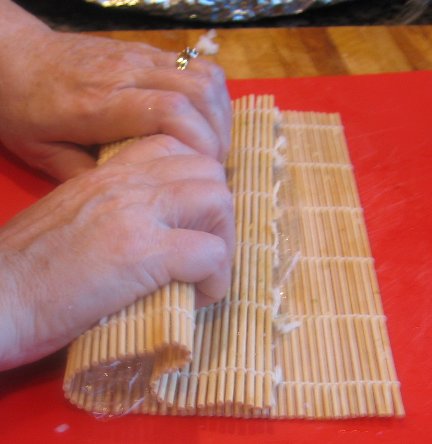
Placing your fingers on the ingredients, carefully bring the bottom end of the rolling mat and the plastic wrap up and over the ingredients (tucking the end of the nori to start a roll). Pull back the rolling mat and plastic wrap, as necessary, so it does not get rolled into the sushi. Roll tightly with firm pressure.
-
Continue rolling the sushi and pulling back the rolling mat and plastic wrap, as necessary, until you have approximately 1 to 2 inches of the top of the nori showing. Rub a small amount of cold water on the edge of the nori and bring the nori around so that it completes the sushi roll.
-
Gently squeeze the rolling mat around the sushi roll until it is firm and forms an even roll (be carefully not to squeeze too hard, as you may crush the ingredients or squeezed them out).
-
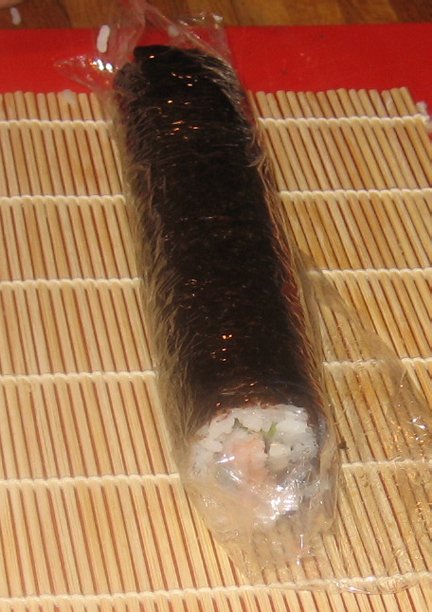
Wrap the plastic wrap around the roll and set aside until ready to cut. Refrigerate for longer storage . Repeat with remaining nori sheets to make additional rolls.
-
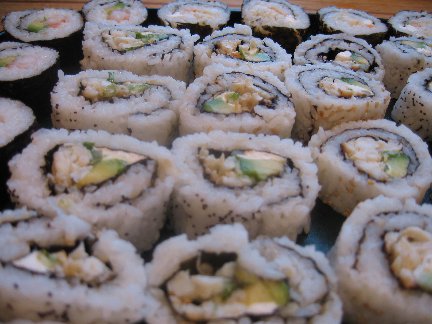
Place rolls on a flat cutting board and remove plastic wrap. Using a Sushi knife or a sharp knife, slice the sushi roll first down the middle. From there you can cut it into 6ths or 8ths, whichever you prefer (wet the knife between each cut to make it easier to cut and keep the rice from sticking to the knife).
-
-
Turn the cut California rolls on end and arrange on a serving platter or Sushi Plates. Serve with Wasabi (Japanese Horseradish), soy sauce, Pickled Ginger, and Chop Sticks.
-
Makes approximately 40 California Rolls.
* Only use Japanese medium-grain sushi rice in sushi making. It is a medium-grainedTo purchase, see What's Cooking America's Store on right.
** Roasted-Seaweed (Nori) - Sheets of thin seaweed which is pressed and dried. As a general rule of thumb – good Nori is very dark green, almost black in color.
*** Imitation crab sticks are the easiest to use. They can be found in Japanese food stores.
Sushi Dining Etiquette:
At most sushi bars, the waitress will offer a hot towel to wash your hands so you can pick up sushi with clean fingers. At home use hot washcloths.
Do not rub your chopsticks together to remove any splinters. It is considered rude!
With your Sushi order, you will be served some pickled ginger, a small mound of wasabi, and soy sauce. Eat a slice of pickled ginger after each variety of sushi to cleanse your palate . It is not proper to mix the wasabi with the soy sauce.
Sushi is meant to be finger food, quick and tasty. It is preferable to eat sushi with ones hands rather than with chopsticks, but both ways are acceptable in America.
Eat the whole sushi roll at once. It is not appropriate to eat part of a piece of sushi and place the other piece back on a plate. Once you have picked something up you should eat all of it. Exception: If the sushi is just too big to eat at once, bite the sushi in half and place the remainder back on the plate.
Do not dip the rice portion of the sushi pieces into the soy sauce as it becomes too moist and can cause sushi to fall apart. Simply dip the topping or the seaweed (Nori) in the soy sauce before eating.
If a piece of fish is on top of your sushi, put the whole portion in your mouth, holding the sushi so the fish part touches your tongue (turn sushi upside down).